


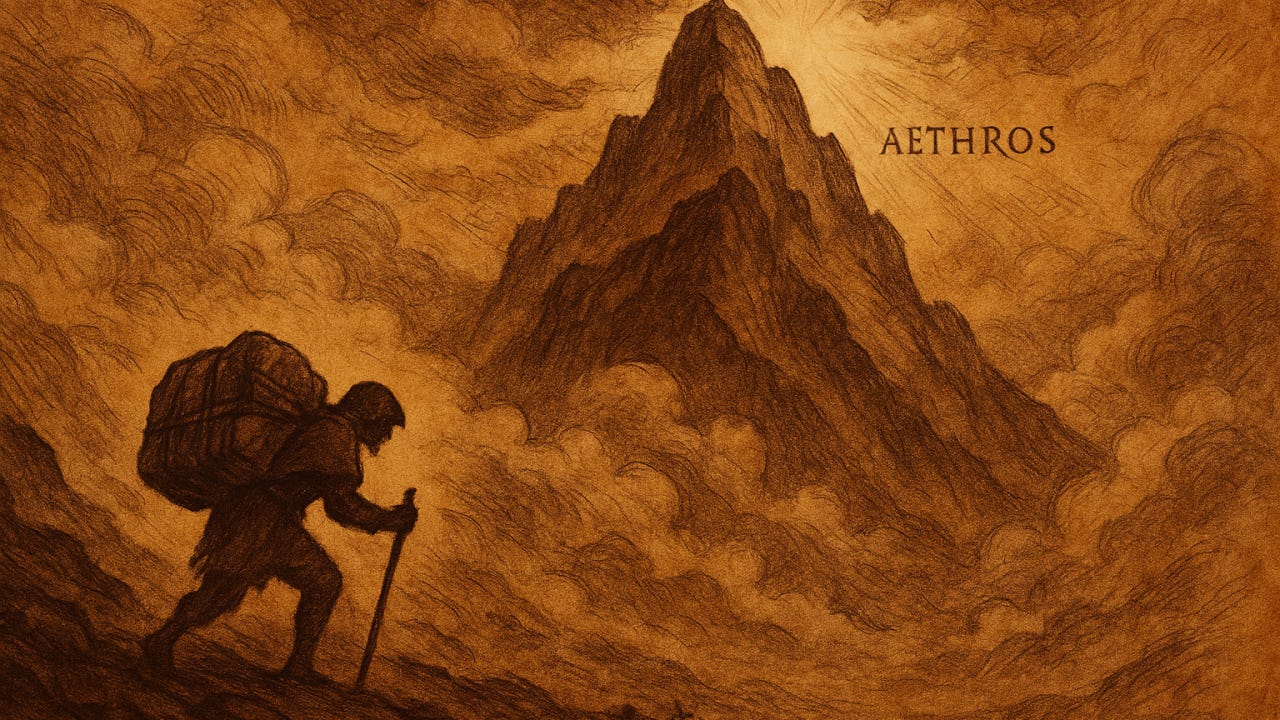
In the highlands, where clouds split against ancient stone, there stood a mountain known as the Aethros.
For a thousand generations, the people of the valley below were the Carriers. They learned the way of the burden: how to balance impossible weight, how to breathe thin air, how to place each foot on paths where one slip meant death.
The Aethros was merciless. Ice storms could blind you in moments. The air so thin that men would collapse, their lungs burning, their vision narrowing before darkness took them.
And yet, the people climbed.
Every day, merchants arrived with goods that needed to cross the mountain. The path around took thirty days. Over it, if you survived, took seven. The Carriers made this journey, hoisting massive loads onto their backs and beginning the ascent.
Children would watch their fathers leave at sunrise, counting days until their return. Sometimes, they returned. Sometimes, they did not.
This was the way. This was who they were.
The Carriers took pride in their suffering.
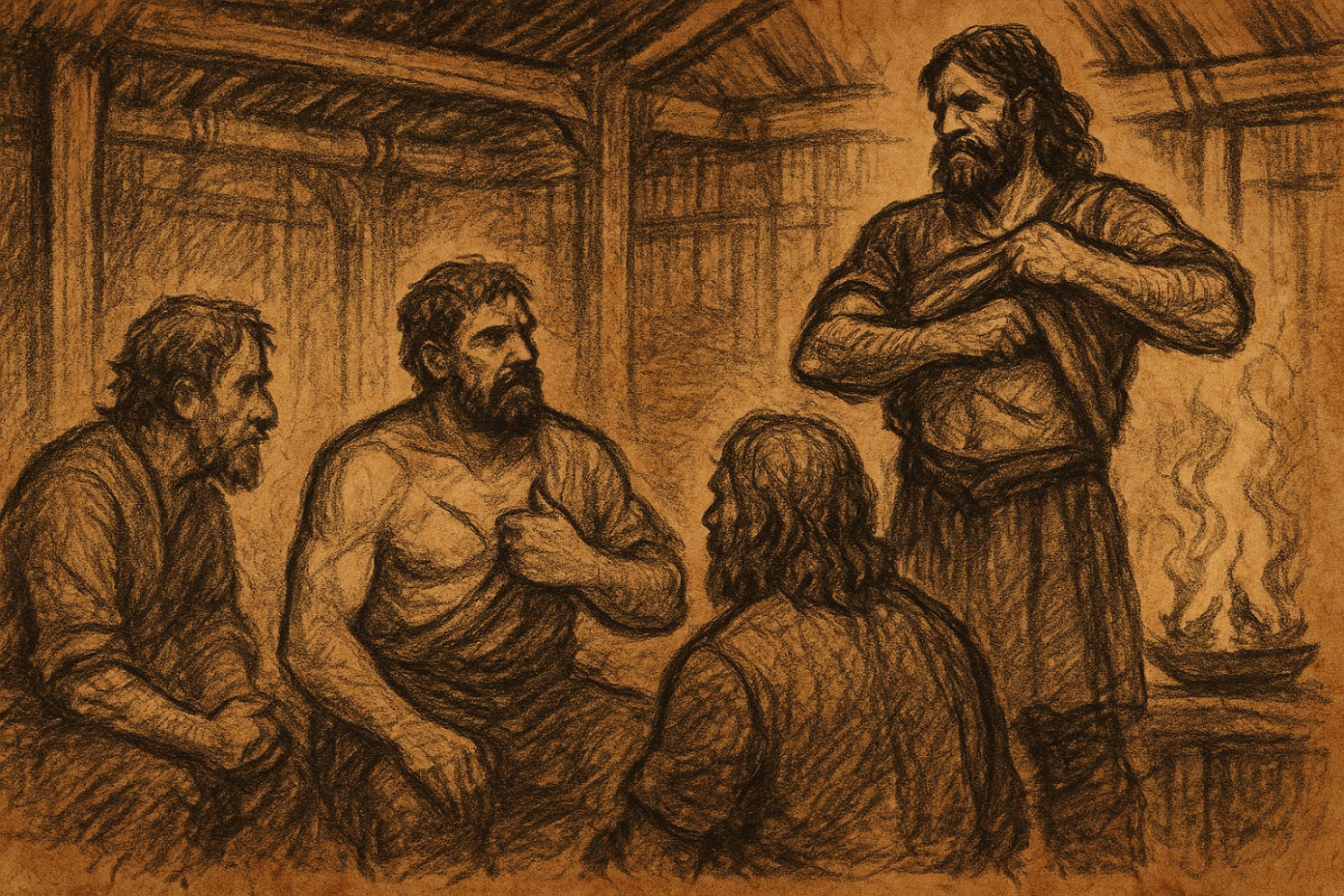
In the longhouses at night, veterans would show their scars: the twisted knee, the blackened fingers lost to frostbite, the burns from volcanic vents. These scars were holy. Proof of worth.
Young men would brag about weight carried. The merchants paid well, not for what reached the other side, but for the attempt. One stone carried paid for one day’s food. The more you carried, the more you earned.
Some had made fifty crossings. Living legends, their bodies broken but their status unquestioned. They were revered.
No one questioned why this was necessary. The mountain was simply there. Crossing it was what Carriers did. It was their identity, their economy, their entire world.
Then, in the span of a single generation, the world shifted beneath their feet.
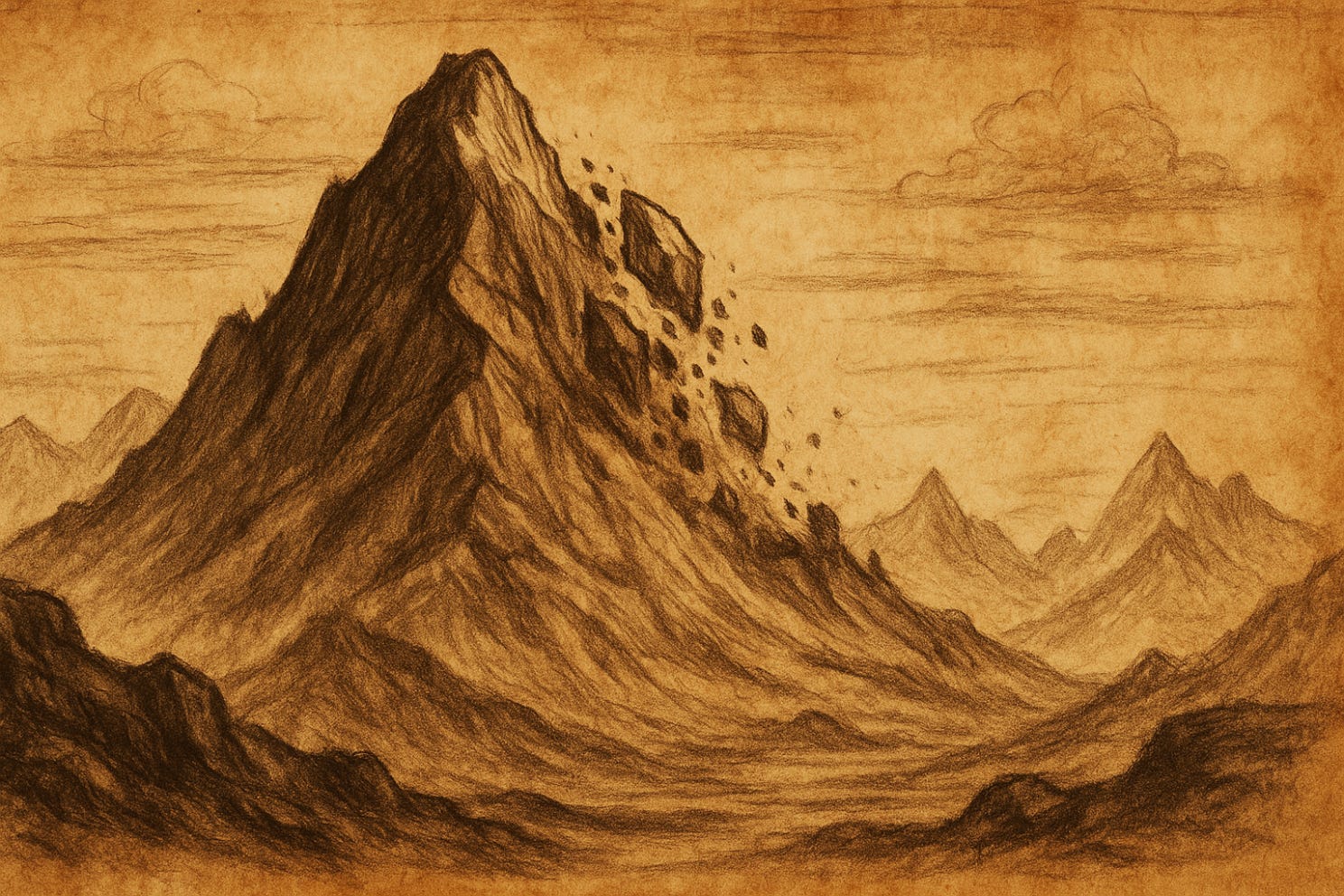
The mightly Aethros began to collapse, its frozen heart giving way to change.
It began with small tremors. Routes that had been stable for centuries suddenly collapsing. The elders dismissed it. Mountains shift, they said.
But it didn’t pass. Within a few years, great sections of the Aethros began to crumble. The snow line dropped. Ice bridges melted. And most impossibly, the mountain itself seemed to be sinking.
Passes that had taken days now took hours. Slopes that had killed countless Carriers became gentle inclines that even children could walk. The thin air grew thicker. The bitter cold became merely cool.
At first, the Carriers celebrated. “The gods favor us! The mountain grows merciful!”
But then the merchants stopped coming.
A Carrier named Kael returned from what should have been a seven-day crossing. It had taken her two.
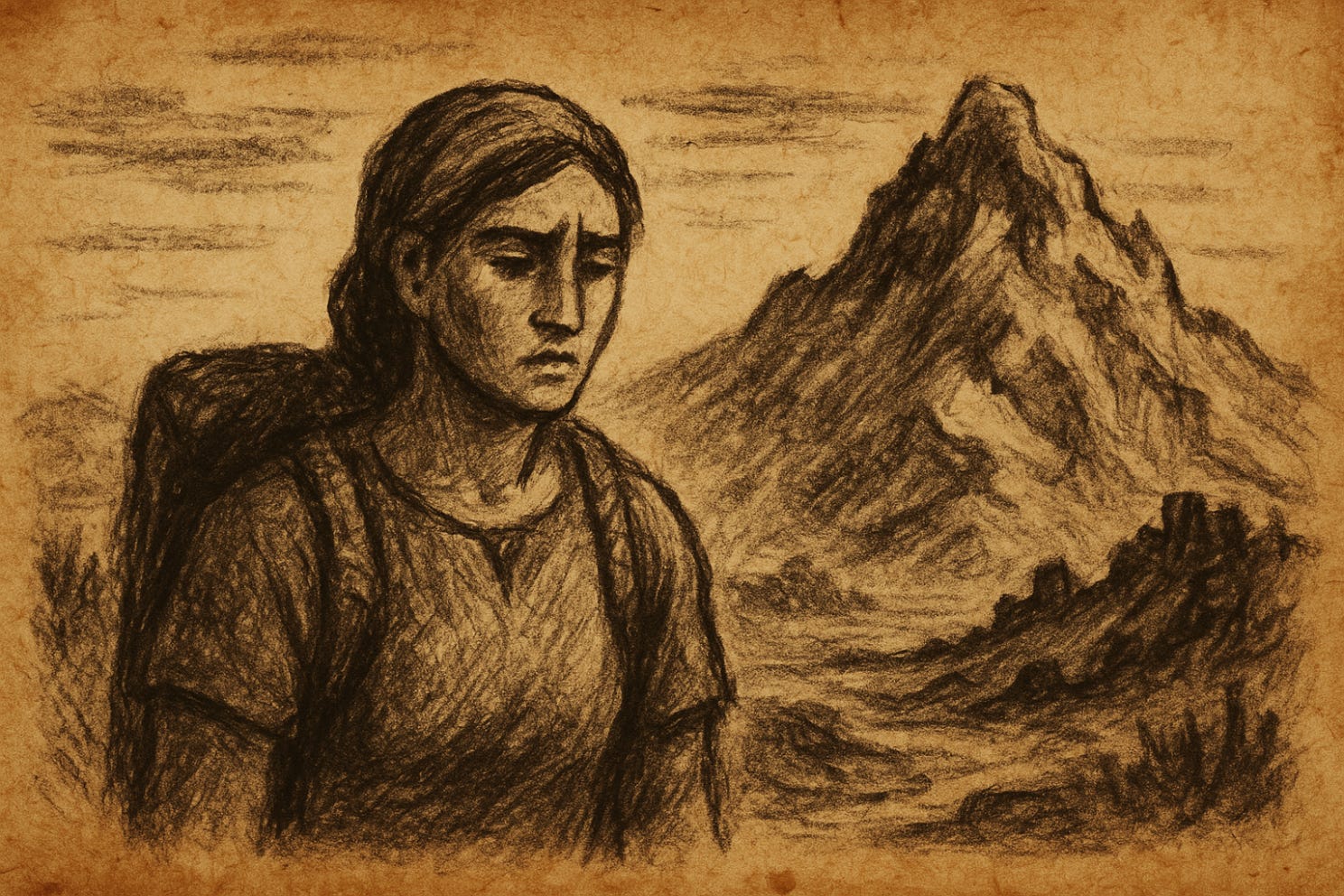
She found her merchant settling accounts. “You did excellent work,” the merchant said. “But this will be our last contract.”
Kael stared. “The crossing is easier now. We can carry more, move faster...”
“That’s exactly the problem,” the merchant said, not unkindly. “Anyone can make that crossing now. My own children could do it. I don’t need Carriers anymore. I need someone to tell me why my goods aren’t selling on the other side. I need someone to help me understand which goods to carry in the first place.”
She paused. “The carrying itself? That’s no longer the hard part.”
Kael walked back to her village in silence. The ropes on her shoulders, once badges of honor, suddenly felt like chains.
The village council convened that night.
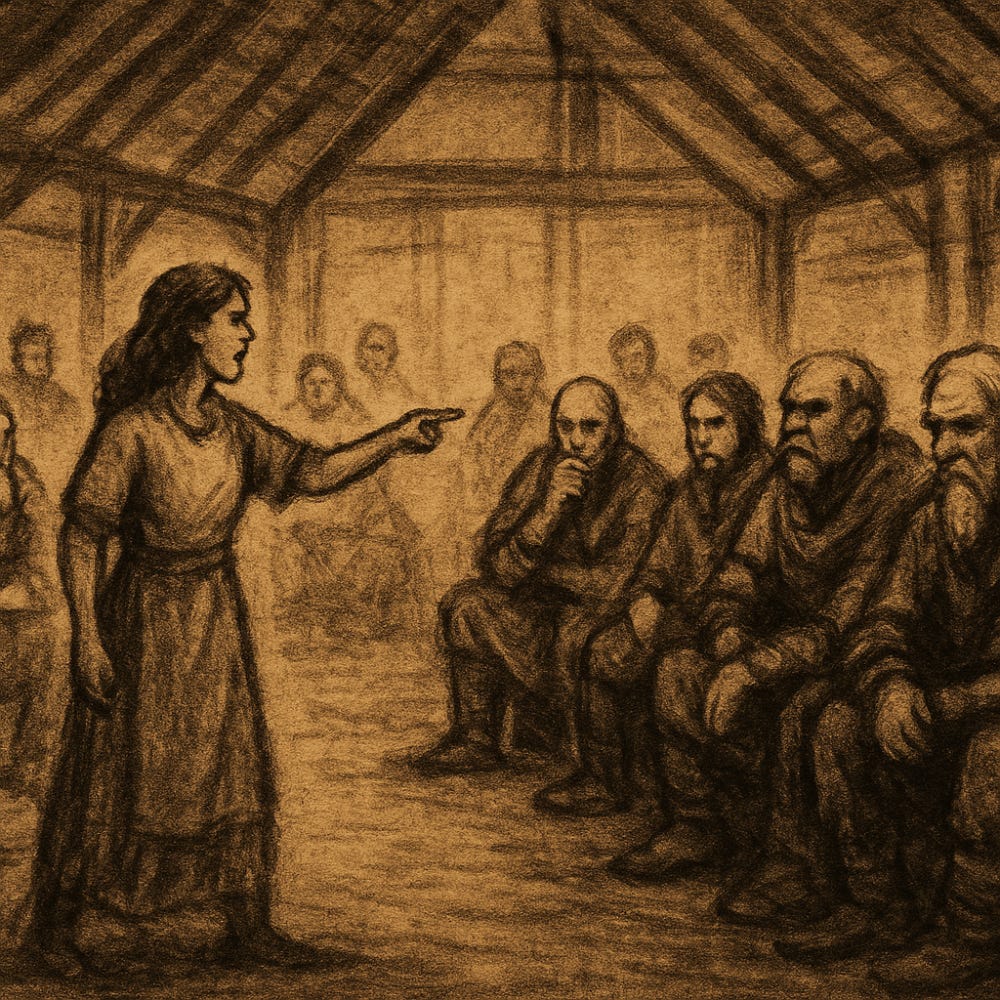
“We must train harder!” the elder Carriers shouted. “Lower our prices! Carry more for less!”
But Kael stood and spoke: “The mountain is dying. And we are dying with it.”
The longhouse fell silent.
“For a thousand years, we’ve told ourselves that our suffering made us valuable. That our scars were holy. But we were wrong. We weren’t valuable because we could suffer. We were valuable because the mountain was impossible to cross any other way.”
“Now the mountain is possible. Soon it will be easy. And when any child can walk across it... what are we?”
An old Carrier spat on the floor. “We are Carriers. That is what we are.”
“No,” Kael said quietly. “We carried because people needed things moved from here to there. But that was never the real problem. The merchants don’t lie awake worrying about how goods cross the mountain. They worry about which goods to move. Where to sell them. Why no one’s buying what they have.”
“Those are not our problems to solve,” the elder said.
“Then whose are they?” Kael asked. “Because if we don’t solve them, someone else will. And we’ll be left here, practicing our rope knots while the world moves on without us.”
The village split.
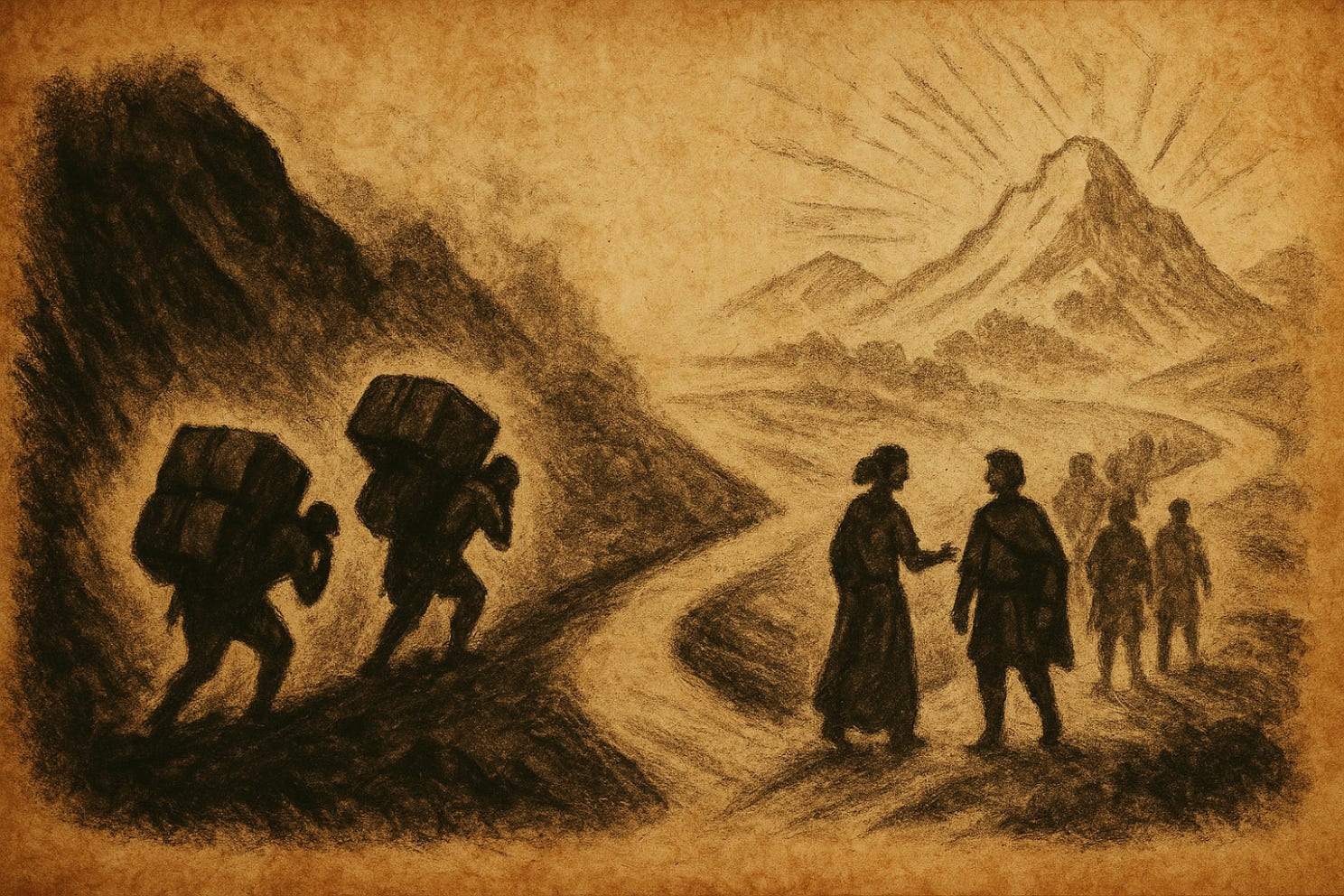
Some Carriers continued as they always had, carrying lighter loads over an ever-gentler mountain, earning less and less, telling themselves the mountain would grow fierce again.
Their numbers dwindled.
Others, like Kael, made a more painful transformation. They went to merchants asking not “what should we carry?” but “what problems keep you awake at night?”
They learned that merchants struggled to predict demand. That timing mattered more than carrying capacity. That the real value wasn’t in the crossing. It was in knowing what to cross with, and when, and why.
These transformed Carriers were no longer paid for their suffering, but for their insight. Sometimes their advice was wrong, and they earned nothing. But when they were right, when they helped a merchant succeed, they earned more than any crossing had ever paid.
It was terrifying. The old way had been clear: carry weight, endure pain, get paid. This new way meant thinking, questioning, and sometimes failing.
But slowly, these new merchants-who-had-been-Carriers began to thrive.
Years passed. The mountain continued to shrink.
Years passed. The mountain continued to shrink.
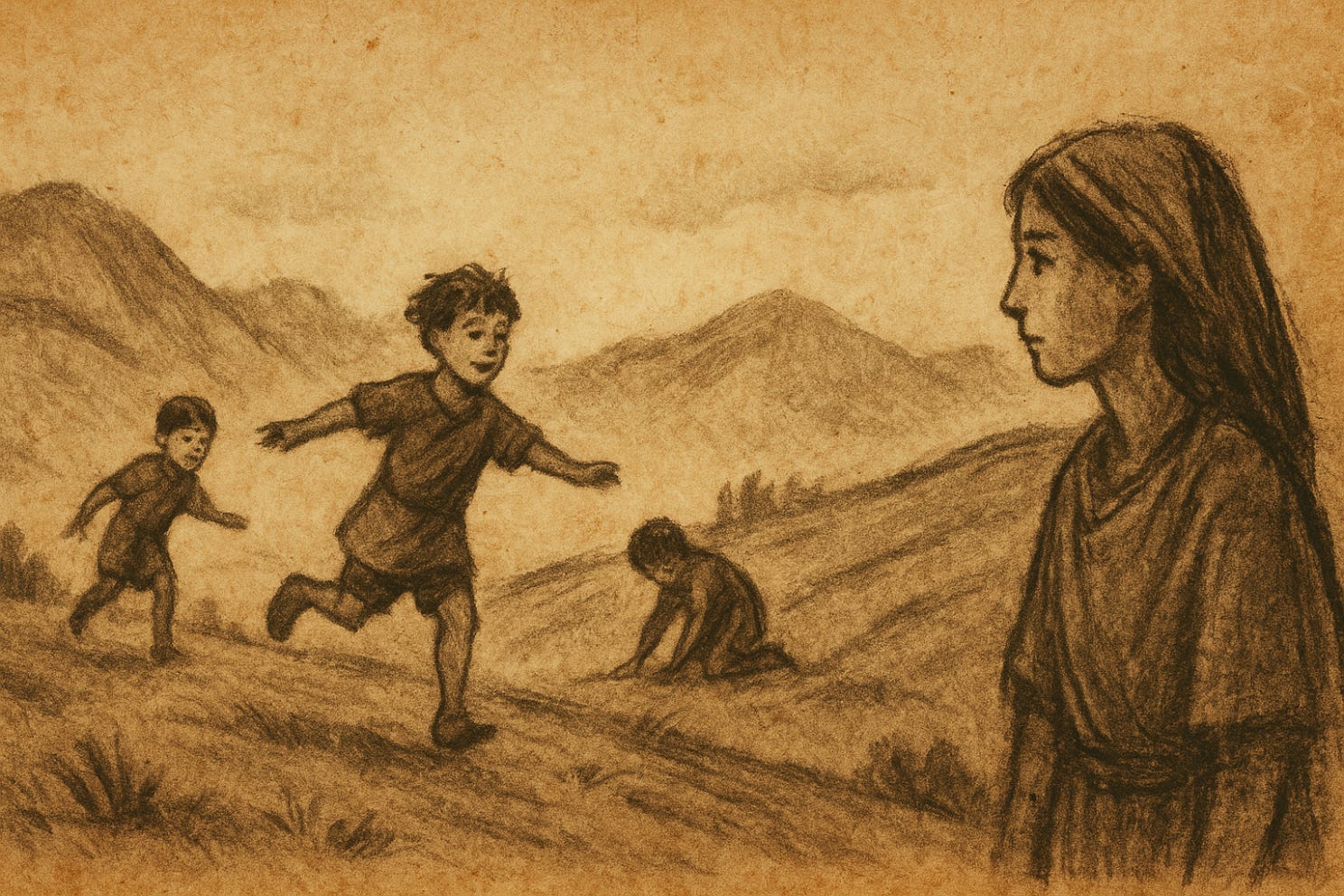
One evening, Kael stood at the base of what had once been the dreaded Aethros. Children played on slopes that had once killed their grandparents. Flowers grew at heights where nothing had grown before.
An old Carrier sat nearby, one of the last who still practiced the ancient forms, loading stones onto his back, climbing for no purpose except that climbing was what Carriers did.
He saw Kael and spat. “You betrayed us. You abandoned the way.”
Kael sat beside him. “When I close my eyes, I still feel the ropes cutting into my shoulders. I still taste blood from breathing thin air. Those things were real. Our strength was real. Our courage was real.”
The old Carrier nodded, vindicated.
“But they were never the point,” Kael continued. “We thought the suffering itself was sacred. We became so focused on being strong enough to climb the mountain that we forgot to ask why we were climbing it at all.”
She gestured toward the children. “The mountain made us necessary. And then it didn’t. And we had to choose: spend our lives mourning what we used to be necessary for, or find new ways to be necessary.”
“I am a Carrier,” the old man said stubbornly.
“No,” Kael said gently. “You were someone who solved the problem of crossing an impossible mountain. The mountain stopped being impossible. The problem changed. And we have to change with it.”