

The Register
A man who wanted to know which way the future would go. A short story.

For a while now the ground under Sandeep had not felt steady. Every week brought something new, some tool, some announcement, some person declaring that the way he had worked for nine years was finished. He read all of it, and felt worse for it. The unease followed him through his days and sat on his chest at night. He slept, but lightly.
One night, unable to settle, he did the thing that had always steadied him, which was to put it down in writing. If he could name exactly what he needed to know, he thought, and then go and find the answers, the unease would have nowhere left to sit. He wrote three questions, one under the other.
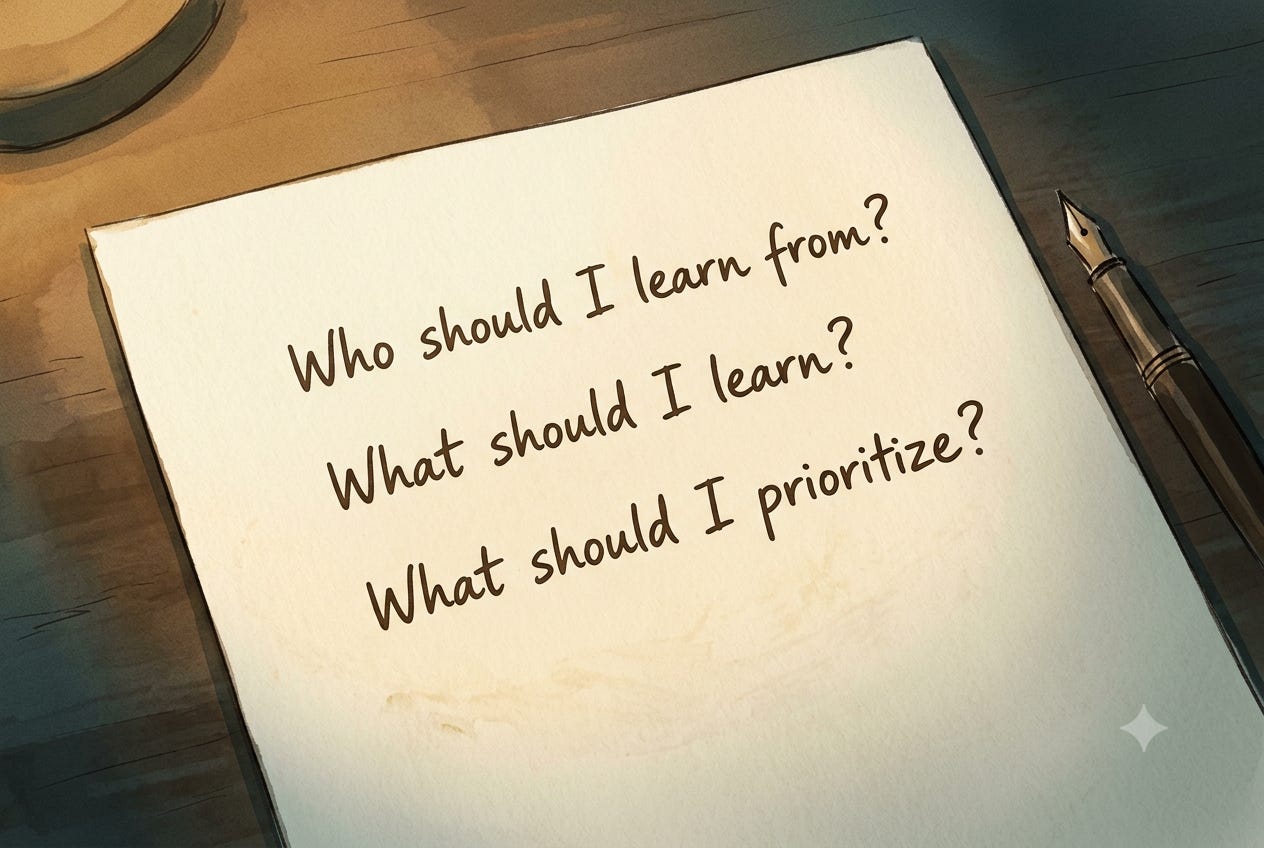
He looked at them a long while. They seemed, on the page, to be the whole of it. Answer these three, and a man would know where to stand, whatever came. He had been good at his work for nine years, good enough that other teams called him when something broke in a way no one could explain. Surely the answers were findable. He folded the paper away, and still he could not sleep.
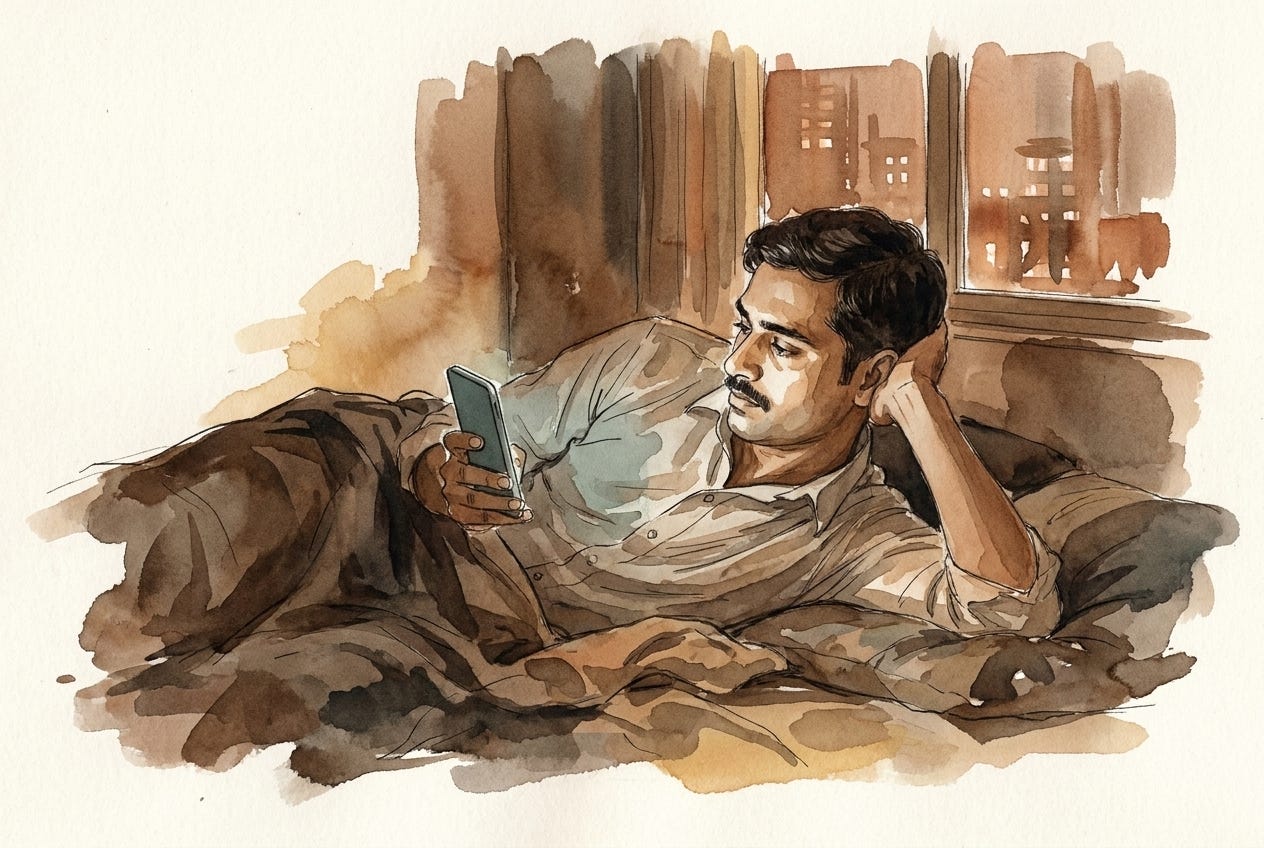
So he began to ask. He asked a senior he trusted, who told him the fundamentals never change and he should go deeper into them. He asked a friend who had moved to Berlin, who told him the opposite, that the fundamentals were the cheap part now and he should learn the new things first, before the others did. He listened to people who spoke with great confidence in public. One said the years ahead belonged to those who went broad. The next said they belonged to those who went narrow. At night he would open the profile of a man he had never met, senior to him by a great distance, and read it slowly, watching the man’s title for some sign of where a person ought to stand.
All the answers were different. He agreed with none of them, and kept his questions, and slept badly.
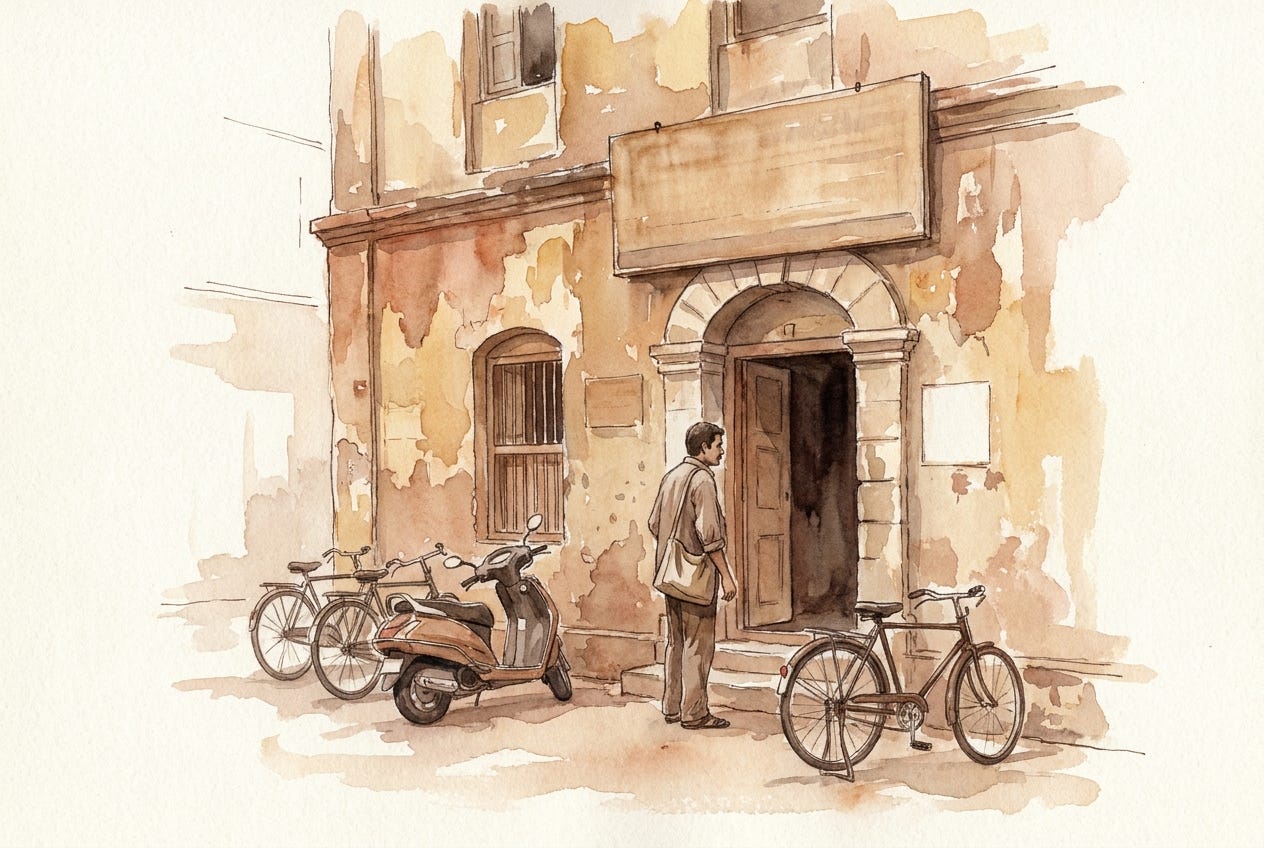
In April he was sent to sit at a bank. Four days a week he was to sit at their operations desk and write down how the work was done, before anyone proposed changing any of it. He read the instruction twice. To sit and write down. To build nothing. He thought this was the quiet corner they kept for men on their way out. He replied that it sounded good.
He was put beside a man named D’Souza, who had been at the bank thirty-one years. D’Souza did a slow and exact kind of work that Sandeep had believed no one still did by hand. He kept a register in his own writing. He knew which payment would fail before it failed, the way an old man knows rain is coming, because he had watched that same file behave that same way a thousand times. Sandeep’s task was to write down what D’Souza knew. He found it dull past description. He had been among the best at his own work, and here he sat, taking down the knowledge of a man with a register.
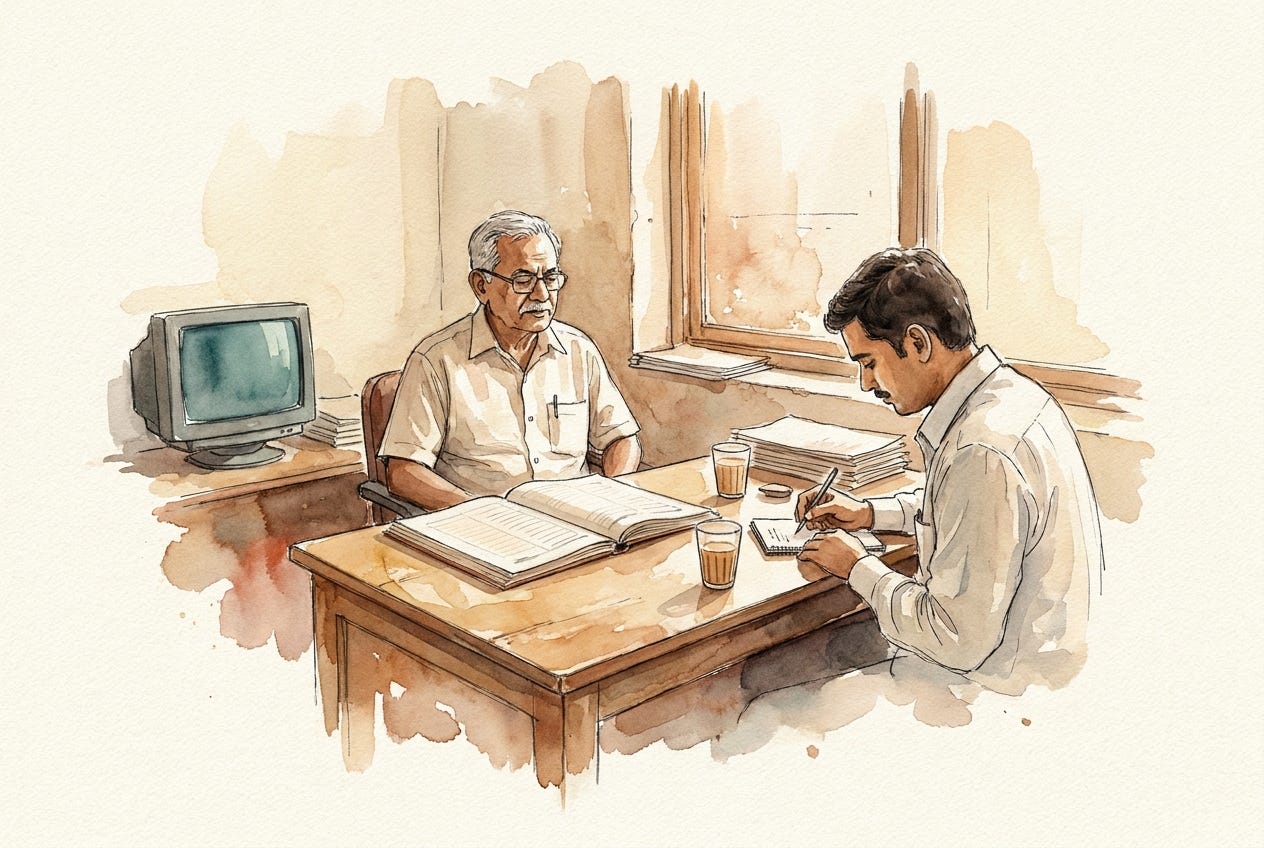
He took it down anyway, there being nothing else to do. And some days he did not think of his three questions at all, because writing down what D’Souza carried took the whole of his attention, and what D’Souza carried had no bottom to it. A week went by, and then another. He learned the names of the people at the desk, and which of them took sugar.
There was a manager at the bank named Rao who had not wanted Sandeep’s people there, and said so, in the courteous way that leaves no doubt. He believed outside men came in, drew their diagrams, charged for them, and went away, and that D’Souza and his register were worth more than the lot of them. Sandeep, who privately thought Rao was right, found it hard to sit near him.
On a Thursday near the end of the month a cheque did not clear. It was small by the bank’s reckoning, but it was the wages of forty men who worked for one contractor, due on the first. The cheque had stuck somewhere in the gap between the bank and the clearing house. D’Souza had stepped out. Rao stood over the desk, pale, for the contractor was on the telephone and the cut-off was 40 minutes away.
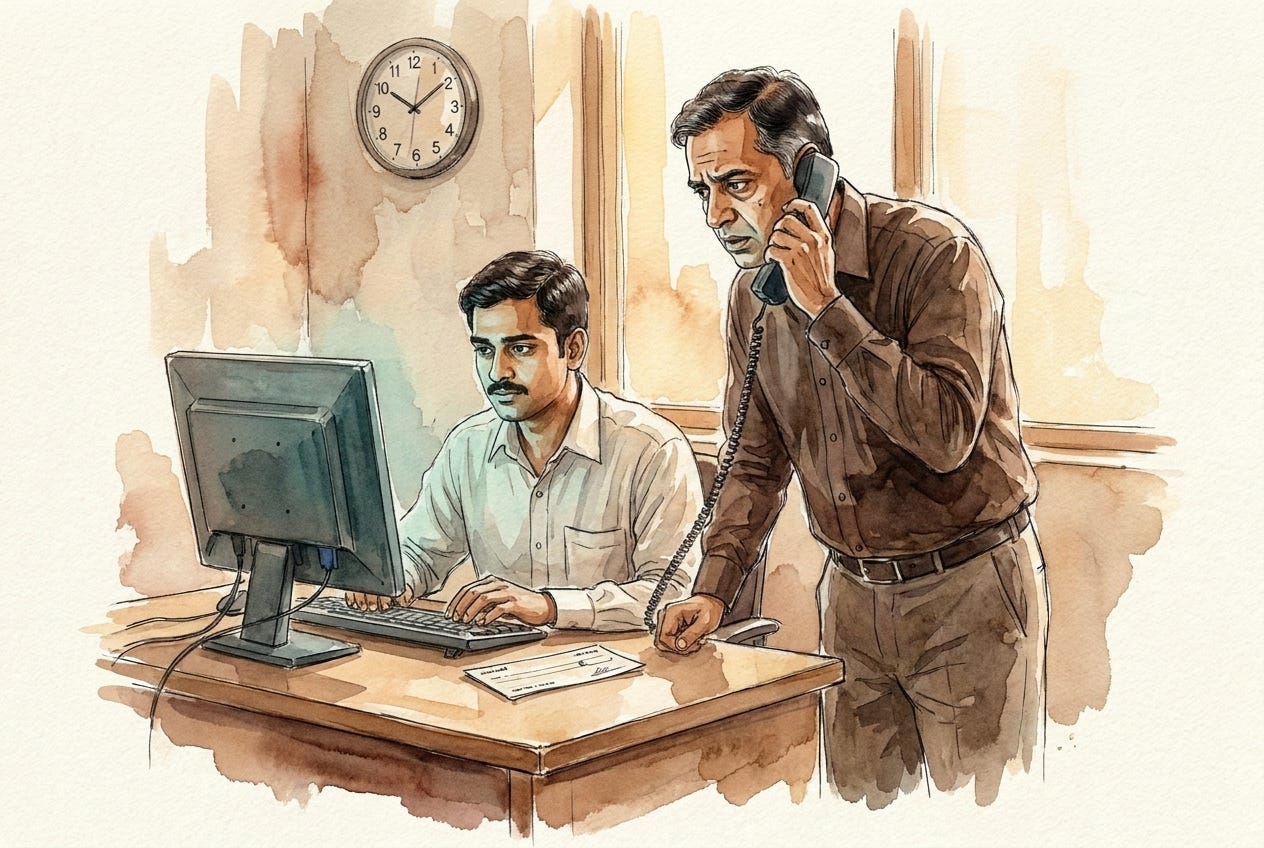
Sandeep sat down at the screen. He traced the cheque, and he asked the desk the things that only they could know, the small local truths written down in no manual, and between what he could read and what they could tell him, they found where it had stuck and put the cheque through. The forty men would be paid on the first.
Rao said little. He laid his hand on Sandeep’s shoulder a moment, and left it there, and went to make his call.
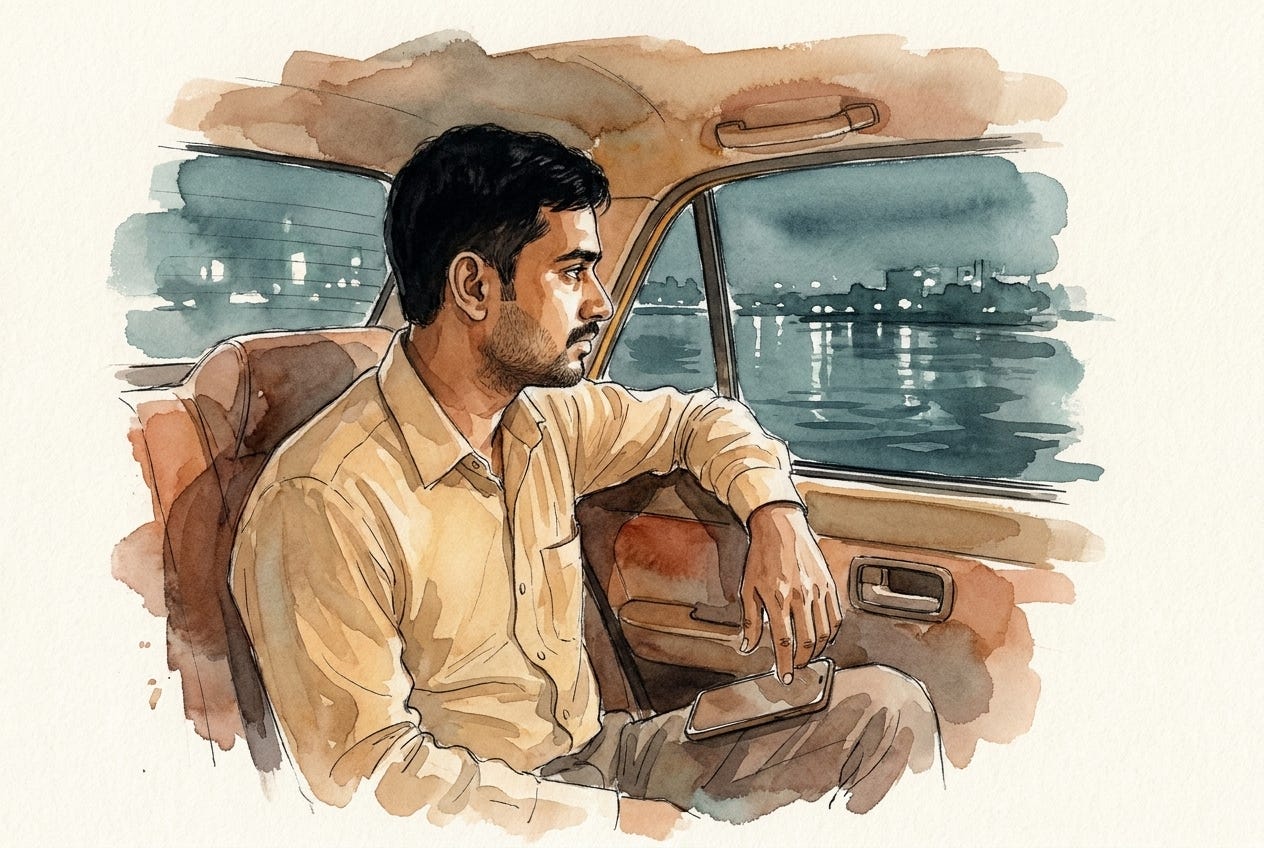
On the cab home that evening his phone lit in his hand. It was the hour he usually lost to it, putting off sleep, scrolling the news, reading one more thread about what was ending and what was coming, and feeling the unease climb the more he read. His thumb had found the phone before he had decided anything. But tonight he looked at it and felt nothing.
He turned the phone face down on his knee, and the three questions he had written in came back to him. This time he had the answers.
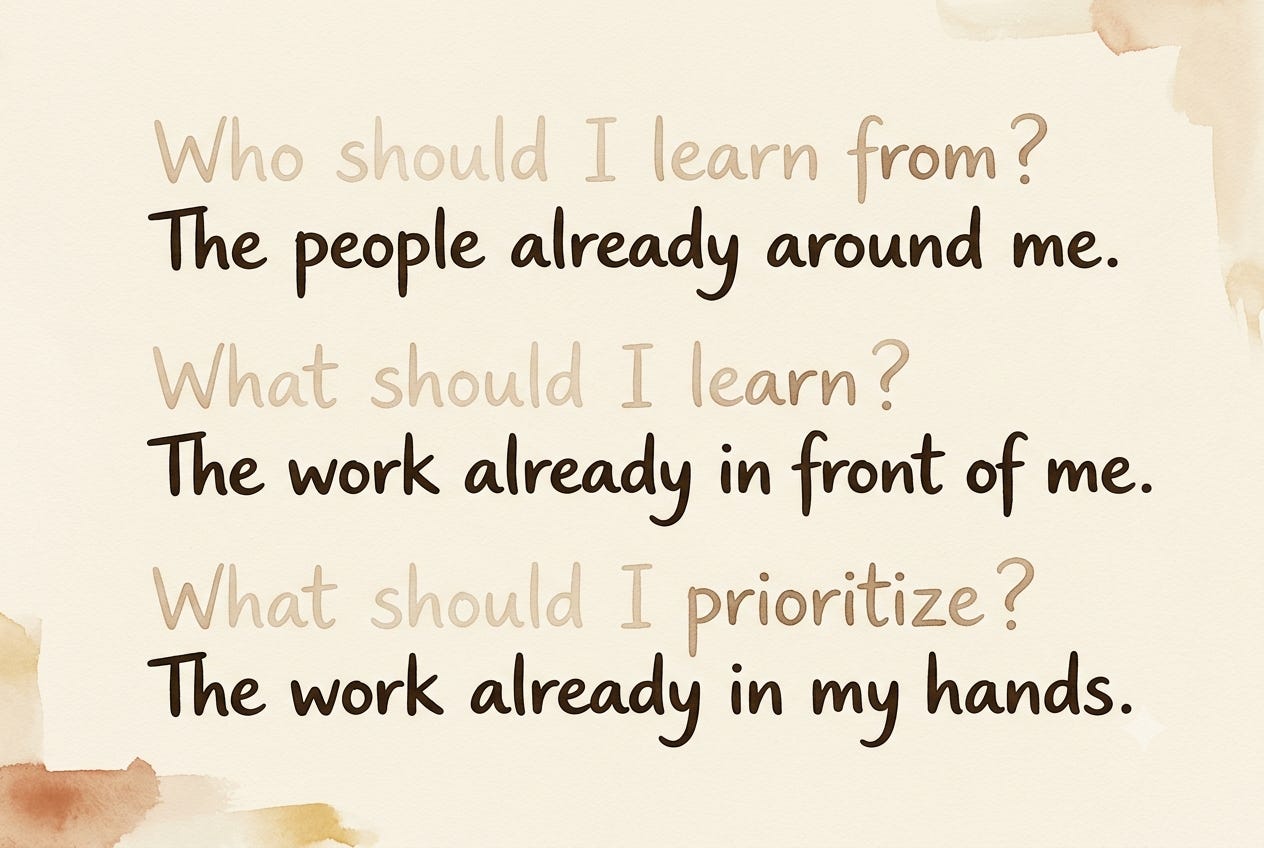
It had all been in front of him the whole time.
The cab crossed the river. He watched the water go by and did not reach for the phone again.
When the rate of change is fast, the mind runs only one way, which is forward. What will happen? What am I supposed to do?
But the speed is the only new thing. Slow it down, and what is left was always there. The future was never knowable. We believed otherwise only because, for a long while, it changed slowly enough to ignore.
The future has always been uncertain.